Sex Work Is Not a One-Dimensional World
 Dec, 7 2025
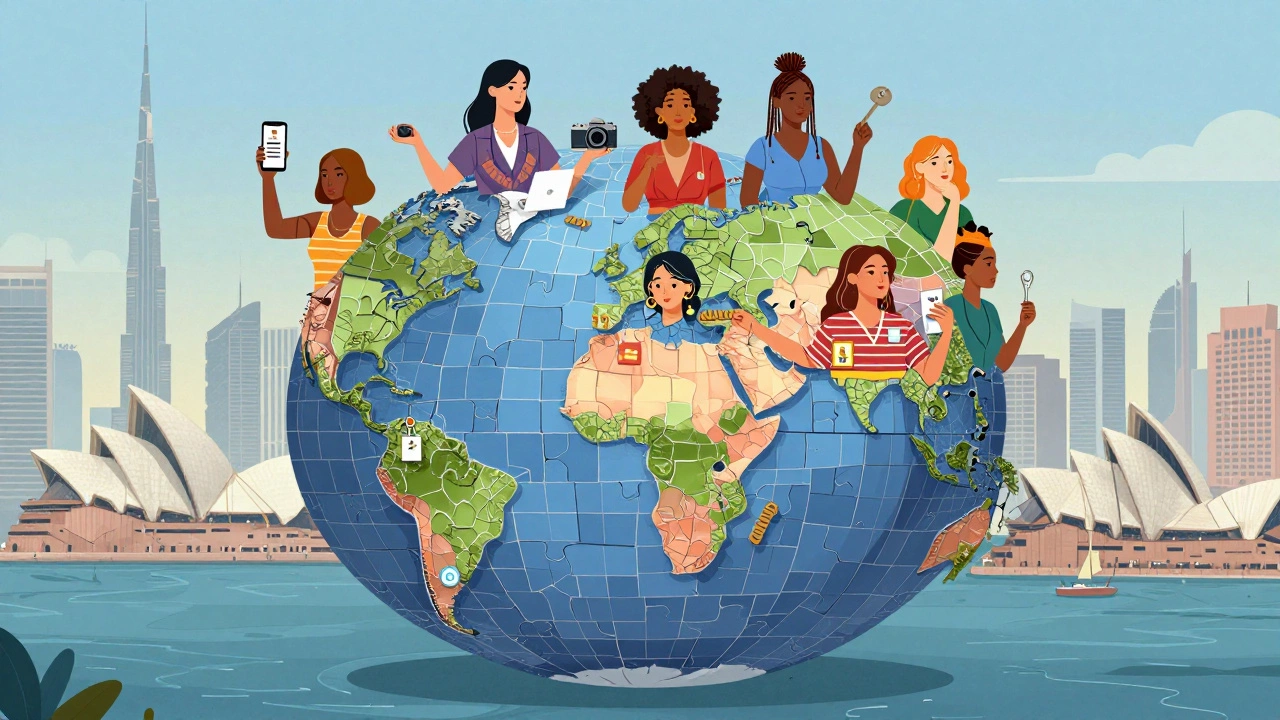
People often reduce sex work to a single story: desperation, exploitation, or moral failure. But the reality is far more layered. Around the world, from Bangkok to Berlin, from Toronto to Dubai, people enter sex work for reasons as diverse as their lives. Some do it to pay for school. Others use it to support family members abroad. A few treat it like any other freelance job-choosing hours, clients, and boundaries. It’s not a monolith. It’s a mosaic.
Take the case of someone searching for euro girls escort dubai. That phrase might sound like a stereotype, but behind it are real people making choices in a city where tourism, business, and cultural exchange collide. Many of these individuals aren’t trapped-they’re navigating complex systems: visas, language barriers, client expectations, and safety protocols. They’re not just bodies for hire; they’re entrepreneurs managing bookings, setting rates, and building client trust. The stereotype doesn’t capture the logistics, the negotiation, or the quiet pride some feel in controlling their own labor.
It’s Not Just About Money
Money is often the entry point, but it’s rarely the whole story. A woman in her late 20s from Poland moved to Dubai not because she had no other options, but because she wanted to save enough to open a small bakery back home. She worked evenings, studied Arabic online during the day, and saved every dirham. Another person, a non-binary artist from Sweden, found that sex work gave them the financial freedom to focus on their photography without taking a corporate job they hated. For them, it wasn’t survival-it was strategy.
Studies from the Global Network of Sex Work Projects show that over 60% of sex workers in regulated environments report higher levels of autonomy than in other informal labor sectors. That’s not because the work is easy. It’s because, when they have control over their conditions, they can set boundaries that protect their mental and physical health.
The Myth of the "Victim"
Too often, media and policy treat all sex workers as victims in need of rescue. But rescue isn’t always wanted. In 2023, a survey conducted by a coalition of sex worker-led organizations across the Middle East found that 78% of respondents preferred legal recognition and safety training over criminalization or "rescue" programs. They didn’t want to be saved. They wanted to be seen as workers-with rights, risks, and responsibilities.
When governments push for raids or crackdowns under the guise of protection, they often make things worse. Workers lose their income overnight. They’re forced into more dangerous situations. They stop reporting violence because they fear deportation or arrest. The real harm isn’t the work itself-it’s the stigma and laws that make it invisible and unsafe.
Regional Differences Matter
Sex work looks different depending on where you are. In Amsterdam, it’s legal and regulated. In Dubai, it’s criminalized but still happens-often under the radar. In Brazil, many workers operate through apps and social media. In Australia, where decriminalization has been in place for over a decade, workers have access to health services, unions, and legal recourse.
That’s why phrases like "euro escort girls dubai" or "euro girl escort dubai" aren’t just search terms-they’re markers of migration, demand, and cultural perception. These workers often come from countries with fewer economic opportunities but higher levels of education. They speak multiple languages. They understand client culture. They adapt quickly. And they’re not anomalies. They’re part of a global labor pattern that’s been growing for decades.
Technology Changed Everything
Before the internet, sex work was mostly street-based or tied to brothels. Now, it’s largely digital. Apps, encrypted messaging, and payment platforms have shifted power. Workers can screen clients before meeting. They can refuse anyone who makes them uncomfortable. They can work from home or a rented apartment. They can build reputations and reviews-just like Uber drivers or Airbnb hosts.
Some workers even run their own websites, offer subscription content, or sell digital services like virtual companionship. One worker in Brisbane told me she makes more from her Patreon than she ever did from in-person work. She doesn’t even leave her apartment anymore. Technology didn’t create sex work-but it did change who controls it.
Legalization Isn’t a Magic Fix
Some argue that if we just legalize sex work, everything will be fine. But legalization without decriminalization doesn’t fix the core problem: stigma. In New Zealand, where sex work was decriminalized in 2003, workers still face discrimination from landlords, banks, and even healthcare providers. Just because it’s legal doesn’t mean society accepts it.
What works is decriminalization-removing criminal penalties for both workers and clients-and then investing in health services, housing support, and legal aid. Countries that do this see drops in violence, HIV transmission, and exploitation. The goal isn’t to make sex work glamorous. It’s to make it safe.
Why This Matters Beyond the Industry
Sex work is a mirror. It reflects how we treat labor, gender, migration, and autonomy. If we believe people should have control over their bodies and their time, then we can’t pick and choose which jobs deserve dignity. A nurse, a delivery driver, and a sex worker-all are doing work that keeps society running. One is celebrated. One is ignored. One is vilified.
When we reduce sex work to a punchline or a scandal, we erase the humanity of the people doing it. We also make it harder to address real problems: trafficking, coercion, abuse. Those issues exist, yes-but they’re not solved by criminalizing consensual adult work. They’re solved by listening to those who live it.
So the next time you hear "euro girls escort dubai," don’t assume you know the story. Ask yourself: who is this person? What do they want? What barriers are they navigating? The answers might surprise you.